
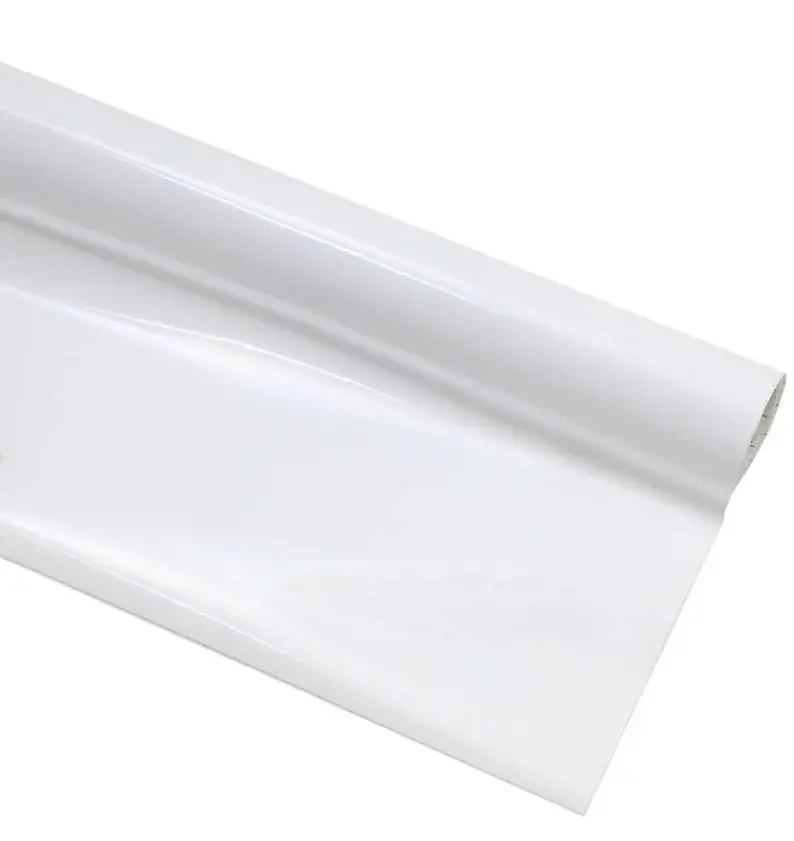
Fablon Vinyl Sticky Back Glossy White – Creativity Made Simple
Transform Your Space with Ease
Fablon Vinyl Sticky Back Glossy White is the ultimate tool for bringing your creative ideas to life. Whether you’re a seasoned crafter or just starting out, this versatile vinyl allows you to transform furniture, walls, and even stationery into stunning designs effortlessly. With its adhesive backing, you’ll avoid gluey messes and enjoy an easy peel-and-stick application. Perfect for brightening up any space or adding a personal touch to your favorite items.
Craft Like a Pro
Achieve a professional finish without the hassle! The Fablon Vinyl eliminates air bubbles with the help of a squeegee and can be shaped perfectly around objects by gently warming it with a hairdryer. This flexibility makes it ideal for both flat and curved surfaces. From creating colorful decorations to revamping old furniture, this vinyl does it all.
Unleash Your Creativity
Create instant masterpieces with this glossy vinyl. Add it to a canvas using mod podge for a unique art piece or use it to elevate everyday objects into something extraordinary. Lightweight, easy to use, and durable, Fablon Vinyl Sticky Back Glossy White is your go-to solution for spontaneous and creative projects.
Price: £8.00
How a Simple Roll of Self-Adhesive Vinyl Revolutionized My Home on a Budget
When my living space started feeling as inspiring as a hospital waiting room, I knew something had to change. But with my bank account giving me the side-eye, a full renovation was out of the question. That’s when I discovered what I now consider the most versatile and cost-effective home transformation tool: Fablon White Sticky Back Plastic.
If you’re unfamiliar with this miracle material (as I once was), prepare to have your DIY world expanded. This self-adhesive vinyl covering has become my secret weapon for breathing new life into tired surfaces without breaking the bank. Today, I’m sharing everything I’ve learned through countless projects, mistakes, and unexpected victories with this remarkable product.
What Exactly Is Fablon White Sticky Back Plastic?
Before diving into my obsession, let’s clarify what we’re talking about. Fablon is essentially a brand of self-adhesive vinyl film (similar to what some people call Contact Paper) that adheres to almost any smooth surface. The white version I’m discussing today provides a clean, bright finish that can instantly modernize outdated furniture, countertops, or wall spaces.
The material comes in rolls of varying widths and lengths, featuring a paper backing that peels away to reveal the adhesive side. It’s flexible, water-resistant, and surprisingly durable when applied correctly. Think of it as a giant, sophisticated sticker that can transform virtually any flat surface in your home.
My First Fablon Fiasco (And What I Learned)
My introduction to Fablon wasn’t exactly Instagram-worthy. Armed with enthusiasm but zero experience, I decided my dark brown coffee table would look better in crisp white. How hard could it be to apply some sticky plastic, right?
Three hours, numerous air bubbles, and several choice words later, I stood back to assess my handiwork. It looked… well, like a five-year-old had wrapped a present after consuming an entire bag of sugar. Edges were uneven, bubbles dotted the surface like a case of vinyl chicken pox, and mysterious creases appeared seemingly out of nowhere.
But instead of admitting defeat, I peeled it all off (another lesson in patience) and started researching proper application techniques. That initial disaster taught me more than any YouTube tutorial could, and it sparked what would become a genuine passion for this unassuming material.
Why Choose White Fablon Over Other Colors?
While Fablon comes in a rainbow of colors and patterns, the white version has become my go-to for several compelling reasons:
- Versatility: White matches virtually any color scheme or décor style, from minimalist Scandinavian to farmhouse chic.
- Brightness: It instantly lightens dark spaces and makes small rooms feel more spacious.
- Timelessness: Unlike trendy patterns that may quickly date your space, white remains perpetually in style.
- Customization potential: White provides the perfect blank canvas for additional decorative elements or future changes.
- Visual cleanliness: There’s something inherently fresh and clean about white surfaces that instantly elevates a space.
Of course, white does show dirt more easily than darker colors, but I’ve found this to be a small price to pay for its transformative power. Plus, the material wipes clean with remarkable ease.
The Complete Buying Guide: Finding Your Perfect Fablon Match
Not all sticky back plastic is created equal. Through much trial and error (and a few disappointing purchases), I’ve developed a keen eye for quality differences. Here’s what to look for when selecting your Fablon White Sticky Back Plastic:
Thickness Matters
The thickness of your Fablon directly impacts both its durability and how forgiving it is during application. Cheaper, thinner films (typically around 80 microns) tear easily and show every imperfection in the surface below. I’ve found that mid-range options (120-150 microns) offer the best balance between flexibility for application and durability for daily use.
For high-traffic surfaces like countertops or tabletops, I recommend splurging on premium versions that can reach 180 microns or more. The extra thickness provides additional protection and longevity that makes the higher price point worthwhile.
Roll Dimensions: Calculating Your Needs
Fablon typically comes in rolls with standard widths of 45cm, 67.5cm, or 90cm. The length varies from 1.5 meters to 15 meters depending on the manufacturer and product line. Before purchasing, I always measure my project surface and add at least 10cm to each dimension to allow for trimming and potential misalignment.
For larger projects, I’ve found it’s better to use a single wider roll rather than attempting to join multiple narrower pieces. The seams between pieces are invariably visible no matter how carefully you align them, so minimizing these junctions improves the final appearance dramatically.
Adhesive Quality: The Hidden Factor
The quality of the adhesive backing varies tremendously between brands and even between product lines within the same brand. Premium Fablon features a repositionable adhesive that allows for some adjustment during application—an absolute lifesaver for DIY enthusiasts like me.
I’ve learned to avoid products with extremely aggressive adhesives that bond instantly on contact. While these may seem superior in theory, they leave zero margin for error and can lead to frustrating application experiences. The ideal adhesive should allow for repositioning within the first few minutes but develop a strong bond over 24-48 hours.
Finish Options: Beyond Basic White
Even within the “white” category, you’ll find multiple finish options that dramatically affect the final look:
- Matte: Provides a sophisticated, low-reflection surface that hides minor imperfections better than glossier alternatives. I prefer this for larger surfaces like cabinets.
- Satin: Offers a subtle sheen that balances between matte and high-gloss. This is my go-to for most furniture projects.
- Gloss: Creates a bright, reflective surface that can make spaces feel larger but shows every fingerprint and dust particle. I reserve this for specific decorative elements rather than everyday surfaces.
- Textured: Some white Fablon features subtle textures like linen, wood grain, or marble. These can add dimension to your project but require extra care during application to align the patterns correctly.
Brand Considerations: Is Fablon Worth the Premium?
While “Fablon” has become somewhat generic (like “Kleenex” for tissues), it’s actually a specific brand of self-adhesive vinyl. In my experience, genuine Fablon-brand products generally offer superior quality but command higher prices than generic alternatives.
For high-visibility projects or surfaces that will see heavy use, I recommend investing in authentic Fablon or premium alternatives like d-c-fix. For less critical applications or temporary solutions, more affordable options from home improvement stores can perform adequately with proper application.
Essential Tools for Flawless Application
My early Fablon disasters taught me that proper tools make all the difference between professional-looking results and obvious DIY attempts. Here’s what I consider essential for any Fablon project:
Must-Have Items
- Microfiber cloth and cleaning solution: Thorough surface preparation is non-negotiable. Any dust, grease, or residue will create bubbles or prevent proper adhesion.
- Ruler and sharp craft knife: Precise cutting is crucial for professional edges. I replace my blade frequently during larger projects to maintain sharpness.
- Credit card or plastic squeegee: This is your primary tool for smoothing the film and eliminating air bubbles. I’ve found that firm but flexible plastic cards work better than specialized tools in many cases.
- Measuring tape and pencil: Accurate measurements prevent waste and ensure proper coverage.
- Pin or needle: For popping inevitable air bubbles that elude your squeegee efforts.
Nice-to-Have Additions
- Heat gun or hairdryer: Gentle heat makes the vinyl more pliable around curves or corners and can help activate the adhesive in colder environments.
- Felt-edged squeegee: Reduces the risk of scratching the film during application.
- Application spray: A light mist of soapy water solution on the adhesive side can make repositioning easier for large pieces (though this technique requires practice).
- Cutting mat: Protects your work surface and extends the life of your cutting blades.
The Application Process: My Step-by-Step Method
After numerous projects ranging from small trinket boxes to entire kitchen cabinet systems, I’ve refined my application process to minimize frustration and maximize professional results:
1. Surface Preparation
This is where many DIYers go wrong. No matter how clean you think your surface is, clean it again. I use a degreasing cleaner followed by isopropyl alcohol to ensure absolutely no residue remains. For laminate or glossy surfaces, a light sanding with fine-grit sandpaper provides better adhesion.
Allow the surface to dry completely—even slight moisture will create bubbles that are nearly impossible to remove later.
2. Measure and Pre-Cut
For complex shapes, I create paper templates first. For rectangular surfaces, I measure carefully and add 5cm to each dimension when cutting my Fablon piece. This overhang makes positioning easier and can be trimmed after application.
For large pieces, I often recruit a helper to avoid the film sticking to itself or gathering dust while I maneuver it into position.
3. The Hinge Method
Rather than removing the entire backing at once (a recipe for disaster), I use what I call the “hinge method”:
- Position the Fablon precisely where you want it, with the backing still attached.
- Secure one edge with masking tape to create a hinge.
- Flip the sheet back, and peel away just 10-15cm of the backing paper.
- Fold the exposed adhesive section onto the surface and smooth with your squeegee.
- Working in small sections, gradually pull the backing paper away while smoothing the film with your squeegee.
This approach gives you maximum control and dramatically reduces air bubbles and misalignment.
4. The Smoothing Technique
The key to bubble-free application is working from the center outward in overlapping, firm strokes. I hold the unapplied portion of the film slightly elevated to prevent premature contact and smooth in a consistent direction rather than random motions.
For curved surfaces, I gently heat the vinyl with a hairdryer to increase flexibility before application. The warm material conforms more readily to contours but cools quickly, so I work in small sections.
5. Dealing With Inevitable Bubbles
Despite your best efforts, some air bubbles will likely appear. For small bubbles, I use a pin to create a tiny hole at the edge of the bubble (not the center), then squeeze the air out with my squeegee. For larger bubbles, carefully lifting the nearest edge and reapplying can solve the problem.
6. Edge Finishing
For the cleanest edges, I allow the Fablon to overhang slightly, firmly press it into the edges using my squeegee, and then trim the excess with a sharp craft knife. Following the edge precisely while maintaining consistent pressure produces professional-looking results that don’t scream “DIY project.”
My Seven Favorite Fablon White Projects
Over the years, I’ve transformed countless items with white Fablon. Here are my most successful and satisfying projects:
1. Kitchen Cabinet Revitalization
My dark, dated kitchen cabinets were the perfect candidate for a Fablon makeover. Rather than replacing or even painting them, I thoroughly cleaned each door and drawer front, removed all hardware, and applied white satin-finish Fablon.
The transformation was nothing short of remarkable—my kitchen instantly felt larger, brighter, and more contemporary. For added durability, I sealed the edges with clear nail polish to prevent moisture infiltration and applied clear furniture wax over the entire surface for additional protection.
Two years later, they still look fantastic with only minor touch-ups needed around the most frequently used handles.
2. Bathroom Vanity Update
My bathroom vanity had seen better days, with water damage and veneer peeling at the edges. After repairing the structural issues, I applied white textured Fablon with a subtle marble pattern.
The water-resistant nature of the vinyl makes it perfect for bathroom applications, and the textured finish camouflages minor imperfections in the underlying surface. Combined with new hardware, the vanity looks like a high-end replacement at a fraction of the cost.
3. Bookshelf Backdrop
Rather than applying Fablon to the entire bookshelf, I covered just the back panel with high-gloss white. This created a bright backdrop that makes the books and decorative objects pop visually while reflecting light back into the room.
The reflective quality of the gloss finish amplifies light in my otherwise dark living room, and the clean background makes styling the shelves much simpler.
4. Upcycled Vintage Desk
I found a solid wood desk with beautiful lines but a severely damaged veneer top at a thrift store. After sanding the worst areas and filling deep scratches, I applied white Fablon in a wood grain texture that mimics painted wood.
The result honors the desk’s vintage character while giving it a contemporary twist. The textured finish has proven remarkably durable even with daily use, though I do use a desk pad for writing to prevent impressions in the vinyl.
5. Refrigerator Refresh
My rental apartment came with a functioning but aesthetically challenged refrigerator in an odd cream color. While I couldn’t replace it, I could cover it with white Fablon that perfectly matched my other appliances.
This project required careful planning around handles and curves, but the result was worth the effort. I used the matte finish to minimize fingerprints, and even my landlord was impressed with the improvement.
6. Glass Table Transformation
A glass-topped coffee table looked dated and showed every speck of dust. Rather than replacing the glass (expensive) or the entire table (even more expensive), I applied white Fablon to the underside of the glass.
This simple change modernized the piece instantly while maintaining the easy-clean properties of glass on the top surface. The light color also makes any dust much less visible—a practical benefit I hadn’t anticipated.
7. Lampshade Makeover
Plain, slightly yellowed lampshades gained new life with carefully applied strips of white Fablon. The translucent quality of the vinyl allows light to pass through while providing a clean, updated appearance.
This project required careful measurement and extremely precise cutting, but the dramatic improvement justified the effort. The added bonus? The lampshades are now much easier to clean with a damp cloth.
Common Mistakes and How to Avoid Them
My journey with Fablon hasn’t been without setbacks. Here are the most common mistakes I’ve made (so you don’t have to):
1. Inadequate Surface Preparation
Early on, I underestimated how crucial thorough cleaning is. Even invisible residues can prevent proper adhesion and create bubbles. I now clean every surface at least twice and allow complete drying before application.
2. Using Dull Cutting Tools
Trying to economize by continuing to use a dulling blade results in jagged edges and torn vinyl. I now replace my craft knife blade at the first sign of resistance for consistently clean cuts.
3. Rushing the Application
Attempting to cover large areas quickly invariably leads to misalignment, bubbles, and frustration. I’ve learned to divide larger projects into manageable sections and accept that quality application takes time.
4. Choosing the Wrong Finish
My glossy white refrigerator looked stunning for approximately three hours before becoming a showcase for every fingerprint in the household. Now I match the finish to the function: matte or textured for high-touch surfaces, glossier finishes for display areas.
5. Ignoring Temperature Considerations
Applying Fablon in a cold room makes the vinyl less flexible and the adhesive less effective. I’ve found that working in a warm environment (around 21-24°C) produces the best results.
6. Stretching the Material
Pulling the vinyl too taut during application creates tension that can cause edges to lift over time. I now allow a natural drape without stretching, particularly around curves or edges.
7. Neglecting Edge Sealing
In high-moisture environments like kitchens and bathrooms, unsealed edges can allow water to penetrate beneath the vinyl. A simple application of clear nail polish or silicone sealant along edges prevents this issue.
Longevity and Maintenance: Making Your Fablon Last
One of the most common questions I receive about my Fablon projects concerns durability. How long does it really last? Based on my experience:
- High-traffic surfaces (countertops, tabletops): 1-2 years before showing significant wear
- Cabinet fronts and furniture: 3-5 years with proper care
- Decorative applications: 5+ years with minimal maintenance
To maximize the lifespan of your Fablon applications:
- Clean gently using non-abrasive cleaners and soft cloths. Avoid harsh chemicals that can break down the vinyl or its adhesive.
- Prevent prolonged water exposure at seams and edges, drying promptly if spills occur.
- Use appropriate protection such as coasters, placemats, or cutting boards on covered surfaces.
- Address damage promptly by trimming loose edges and applying small patches if needed.
- Avoid direct sunlight when possible, as UV exposure can cause yellowing or brittleness over time.
With these precautions, Fablon provides remarkably enduring results for its modest cost.
Beyond the Basics: Creative Fablon Applications
Once you’ve mastered the fundamentals, Fablon’s creative potential extends far beyond simple surface covering:
Custom Wall Decals
Using a cutting machine or even carefully hand-cutting with a craft knife, white Fablon can be transformed into custom wall decals that rival expensive commercial versions. I’ve created geometric patterns, typography, and even detailed silhouettes that add personalized dimension to my walls.
Frosted Glass Effect
White Fablon applied to glass surfaces creates an elegant frosted effect perfect for privacy without sacrificing light. I’ve used this technique on bathroom windows, glass cabinet doors, and even to create defined zones in my open-plan living space.
Stencil Creation
For unique painted patterns, I create reusable stencils from Fablon by cutting my design and applying it temporarily to walls or furniture before painting. The vinyl creates crisp edges that produce professional-looking results.
Appliance Control Panel Updates
Dated or worn appliance control panels gain new life with carefully cut pieces of white Fablon. By precisely cutting around buttons and indicators, I’ve modernized everything from microwave faceplates to washing machine control panels.
Textured Wall Panels
For a three-dimensional wall feature, I apply white Fablon to foam board cut into geometric shapes, then arrange these on the wall in artistic patterns. The result mimics expensive architectural wall panels at a fraction of the cost.
The Psychological Impact of White Spaces
Beyond the practical aspects, I’ve noticed significant psychological benefits from introducing more white surfaces into my home:
The expanded use of white has measurably improved my mood and productivity. Research supports this personal observation—white spaces reflect more light, which can reduce eye strain and increase alertness. The visual simplicity also reduces cognitive load, creating a sense of order that many find calming.
I’ve found that the transformative power of white Fablon extends beyond aesthetics to influence how I feel in my space. Rooms that once felt cramped and chaotic now feel intentional and peaceful, contributing to an overall sense of well-being that transcends mere decoration.
Cost Analysis: Fablon vs. Traditional Renovation
One of the most compelling aspects of Fablon transformation is the dramatic cost savings compared to conventional renovation methods. Let me break down a recent kitchen project:
- Cabinet replacement quote: £4,200
- Professional repainting quote: £1,800
- My Fablon solution: £165 (including materials and tools)
Even accounting for the time investment and the eventual need for replacement (perhaps in 3-4 years), the economic advantage is undeniable. For rental properties or temporary solutions, the value proposition becomes even more attractive.
This cost-effectiveness doesn’t just apply to large projects. Small items that would be discarded and replaced can be renewed for pennies on the pound, reducing both financial outlay and environmental impact.
Environmental Considerations
Speaking of environmental impact, I’ve become increasingly conscious of how my DIY choices affect the planet. Fablon presents interesting environmental considerations:
On the positive side, extending the useful life of existing furniture and fixtures prevents these items from entering landfills prematurely. Additionally, the minimal waste generated from Fablon application compares favorably to the substantial waste produced during traditional renovations.
However, vinyl products do present end-of-life disposal challenges. To mitigate this, I carefully measure to minimize waste during application and research local recycling options for both the backing paper and any vinyl scraps.
For those particularly concerned about environmental impact, newer eco-friendly alternatives are emerging in the market, though they currently command premium prices and may not offer the same performance characteristics as traditional vinyl.
Final Thoughts: Why White Fablon Deserves a Place in Your DIY Arsenal
After countless projects and years of experimentation, I remain convinced that white sticky back plastic is one of the most versatile, accessible, and transformative tools available to home enthusiasts on a budget.
The combination of immediate visual impact, modest financial investment, and reasonable durability makes it an unmatched solution for those seeking change without commitment to permanent alterations. Its forgiving nature welcomes beginners while offering enough creative potential to satisfy experienced DIYers.
Whether you’re refreshing a tired space, experimenting with design concepts before making permanent changes, or simply extending the useful life of well-loved items, Fablon white sticky back plastic offers possibilities limited only by your imagination and willingness to learn through occasional failure.
I encourage you to start small, develop your skills, and gradually tackle more ambitious projects. The satisfaction of transforming your environment with your own hands—and at a fraction of traditional renovation costs—creates a connection to your space that purchased solutions rarely provide.
Has white sticky back plastic transformed your space? Are you considering a Fablon project? I’d love to hear about your experiences and answer any questions in the comments below!
